
From Theory to Practice: AI Governance Insights
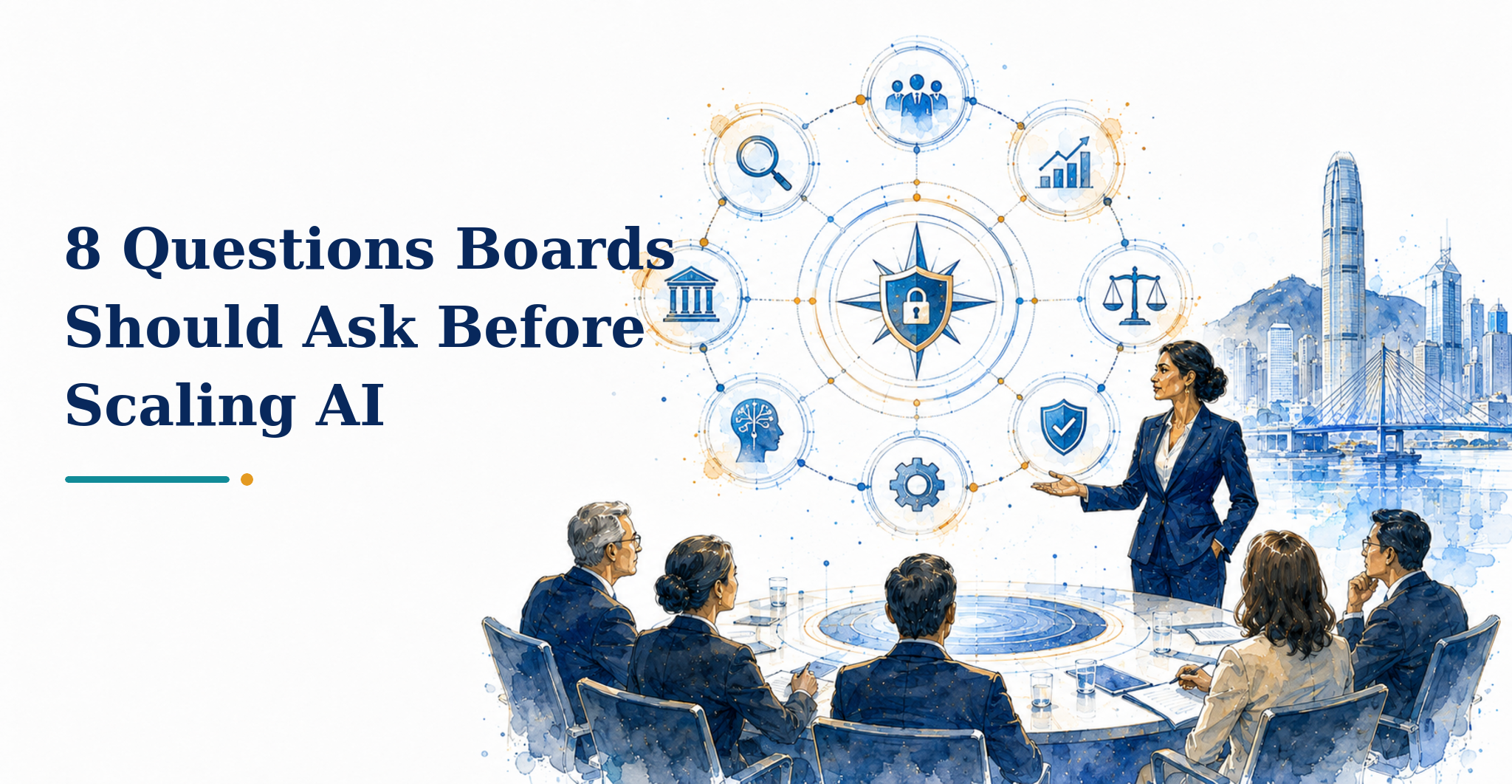
8 Questions Boards Should Ask Before Scaling AI
Introduction
Artificial intelligence is moving rapidly from isolated pilots into systems that influence hiring, customer service, cybersecurity, financial decisions and enterprise operations. As deployment expands, AI risk becomes more than a technical concern. It becomes a matter of organizational governance, strategic alignment and board oversight.
Boards do not need to manage individual AI systems. They do, however, need sufficient visibility to determine whether management has established appropriate accountability, human oversight, evaluation and risk controls.
Before approving broader AI deployment, directors should ask eight essential questions.
1. What Business Problem Is the AI System Expected to Solve?
AI initiatives should begin with a clearly defined organizational problem rather than enthusiasm for a particular technology.
Boards should understand the intended value, affected stakeholders and evidence that AI is an appropriate solution. A successful technical pilot does not automatically demonstrate strategic value.
Board action: Require management to define the business objective, expected benefits, affected stakeholders, success measures and conditions under which the initiative should be reconsidered.
2. Who Remains Accountable for AI-Assisted Decisions?
An automated decision must never become an ownerless decision. Every AI system should have an accountable executive, clearly assigned operational owners and defined responsibility for its outcomes.
Accountability should extend across the system’s lifecycle—from approval and implementation to monitoring, incident response and retirement.
Board action: Request a clear accountability structure showing who approves the system, who monitors it, who responds when it fails and who reports material concerns to the board.
3. Where Can Humans Challenge or Override an AI Output?
Human oversight is meaningful only when people have the authority, information and time required to intervene.
Organizations should identify which decisions require human review, when an output may be challenged and who possesses override authority. Employees should also be protected from pressure to accept an AI recommendation simply because the system appears authoritative.
Board action: Confirm that consequential decisions include documented human review, escalation pathways and accessible override mechanisms.
4. How Are Cultural, Workforce and Stakeholder Effects Evaluated?
AI systems can affect job design, employee autonomy, customer trust, accessibility and cultural representation. These effects may not appear in traditional technical-performance measures.
Boards should understand how the organization evaluates impacts on employees, customers, communities and other stakeholders—particularly when AI influences employment, eligibility, access or public-facing communication.
Board action: Require impact assessments that examine workforce displacement, role redesign, cultural bias, accessibility, dignity and stakeholder trust.
5. How Are Reliability, Fairness, Security and Performance Continuously Evaluated?
AI evaluation cannot end when a system is approved. Models, data, operating environments and user behavior can change over time.
Organizations need ongoing monitoring for declining accuracy, unexpected behavior, bias, security vulnerabilities and performance drift. Evaluation should include both technical measures and organizational consequences.
Board action: Ask management to define monitoring indicators, testing frequency, reporting thresholds and the circumstances that require corrective action.
6. What Third-Party Dependencies Could Create Concentration or Systemic Risk?
Many organizations depend on the same models, cloud providers, datasets and AI platforms. A vulnerability or service failure affecting one provider can therefore disrupt numerous organizations simultaneously.
Boards should understand where critical dependencies exist, whether alternative providers or manual processes are available and how the organization would operate during a prolonged outage.
Board action: Request visibility into critical vendors, shared infrastructure, data dependencies, contractual responsibilities and operational-continuity plans.
7. What Happens When the AI System Causes or Contributes to an Incident?
Organizations need procedures for identifying, containing, investigating and reporting AI-related incidents. These procedures should cover incorrect decisions, harmful outputs, data exposure, security failures and unexpected operational consequences.
An incident-response process should also preserve evidence and support organizational learning rather than focusing only on restoring the system.
Board action: Confirm that AI incidents are integrated into enterprise incident management, with escalation criteria, response ownership, communication responsibilities and post-incident review.
8. What Evidence Is Required to Scale, Pause, Redesign or Retire the System?
Scaling should be a deliberate governance decision supported by evidence. Organizations should define the conditions that justify expansion and the thresholds that require intervention.
A system should not continue operating solely because the organization has already invested significant time or money in it.
Board action: Require predetermined criteria for scaling, pausing, redesigning and retiring AI systems, including clear authority to make each decision.
3 Practical Examples in Action
Example 1: AI-Assisted Hiring
An organization introduces AI to screen job applications and recommend candidates. Before approving wider deployment, the board should ask who remains accountable for hiring decisions, how the system is tested for bias and whether candidates can request human review.
Management should demonstrate that hiring professionals retain decision authority, evaluation criteria are documented and potentially discriminatory outcomes are monitored. The organization should also establish a process for challenging or overriding an inappropriate recommendation.
Example 2: A Culturally Adaptive Customer-Service Agent
A company introduces an AI agent that adjusts its language and communication style for users from different cultural communities.
The board should ask how cultural representation is evaluated, whether diverse stakeholders participated in testing and how sensitive conversations are transferred to human employees. Management should monitor for stereotyping, exclusion and declining customer trust—not only response speed and cost reduction.
Example 3: Autonomous Cybersecurity Response
An organization uses AI to identify suspicious behavior and automatically contain potential threats. Although rapid containment can reduce exposure, an incorrect action could interrupt critical operations.
The board should understand which actions may be performed autonomously, which require human authorization and who can override the system. Management should also demonstrate how third-party dependencies, operational continuity, incident escalation and post-incident learning are addressed.
Conclusion: Governance Before Scale
The central question for boards is not simply whether an AI system works. It is whether the organization can govern the system responsibly as its influence, autonomy and operational reach increase.
Responsible scale requires strategic purpose, clearly assigned accountability, meaningful human oversight, continuous evaluation and the ability to intervene when conditions change. It also requires leaders to recognize that AI failures can emerge from organizational structures and governance gaps—not only from technical defects.
Boards that ask these questions before scaling can help their organizations move from experimental adoption toward responsible, resilient and strategically aligned AI deployment.
People first. Systems strong. AI smart.

My Contribution: ADOR™ Poster Presentation
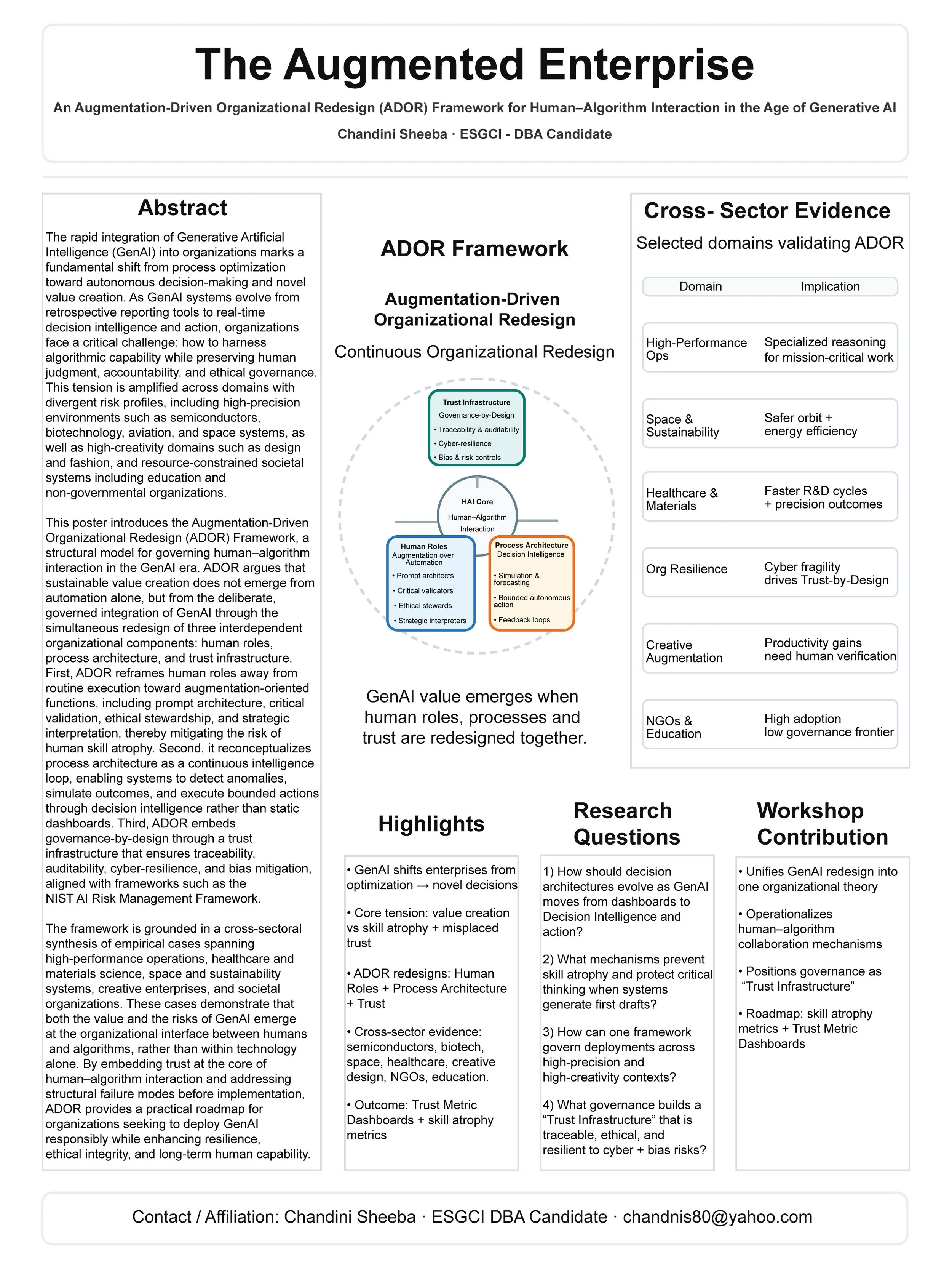
Poster Title:Augmentation-Driven Organizational Redesign (ADOR™)
Introduction
As part of the AI for Business Conference, I presented the Augmentation-Driven Organizational Redesign (ADOR™) Framework, a governance-oriented approach to helping organizations manage human–algorithm collaboration responsibly.
ADOR™ addresses a central organizational challenge: companies are introducing increasingly capable AI systems, but their leadership structures, employee roles, operational processes and accountability mechanisms are not always evolving at the same pace.
The framework proposes that responsible AI adoption requires more than selecting the right technology. Organizations must deliberately redesign how people work with AI, how AI-supported decisions move through operational processes and how accountability is maintained as systems become increasingly autonomous.
8 Key Ideas Presented Through ADOR™
1. Augmentation Should Come Before Automation
ADOR™ begins with the principle that AI should expand human capability rather than automatically replace human participation.
Organizations should first determine how technology can improve analysis, creativity and decision-making before deciding whether a task should be fully automated. This protects human agency while helping organizations capture the value of AI.
2. Human Judgment Must Remain Visible
When AI contributes to a decision, the role of human judgment should remain identifiable. Organizations need to know who reviewed the output, who approved the action and who remains responsible for the result.
Human oversight should be designed into the operating model rather than added only after a problem occurs.
3. Human Roles Must Be Deliberately Redesigned
AI adoption changes what employees do and how their work creates value. Routine execution may decrease while interpretation, critical thinking, validation and oversight become increasingly important.
ADOR™ encourages organizations to prepare employees for roles such as strategic interpreters, AI supervisors, prompt architects and ethical validators.
4. Processes Must Support Continuous Intelligence
Traditional processes often depend on static reports and retrospective analysis. AI-enabled processes can identify anomalies, simulate outcomes and provide continuous decision support.
Organizations must redesign workflows so that AI-generated insights are evaluated, escalated and acted upon responsibly rather than accepted without review.
5. Trust Infrastructure Must Be Built into the System
Responsible AI requires traceability, transparency and clearly defined accountability. These controls should be embedded within systems and workflows rather than treated as separate compliance exercises.
Trust infrastructure helps organizations understand how an output was produced, who relied upon it and how a decision can be reviewed or corrected.
6. Governance Must Be Connected to Operations
Policies alone cannot govern AI. Governance must be translated into operational responsibilities, approval authority, monitoring processes and intervention procedures.
ADOR™ connects leadership expectations with the structures employees need to make responsible decisions during everyday AI use.
7. Accountability Must Remain Human
Even when an AI system performs an action autonomously, responsibility cannot be transferred entirely to the technology.
Organizations must identify the leaders and decision-makers accountable for approving, monitoring and correcting AI-enabled systems. Automation should never create ownerless decisions.
8. Responsible Structure Enables Sustainable Innovation
Governance should not be viewed only as a restriction. Appropriate structure gives organizations the confidence to experiment and scale while maintaining control over ethical, operational and reputational risk.
ADOR™ positions governance as an enabling architecture for responsible innovation.
3 Practical Examples in Action
Example 1: Cross-Functional Generative AI Adoption
An organization introducing generative AI across finance, human resources, operations and customer service could use ADOR™ to define how each department may use the technology.
The organization would establish appropriate human review points, decision ownership, escalation procedures and shared governance expectations. This would help prevent fragmented adoption and inconsistent accountability across departments.
Example 2: AI-Assisted Workforce Decisions
An organization using AI to support hiring, performance or workforce-planning decisions must ensure that employees remain accountable for consequential outcomes.
ADOR™ could help the organization distinguish between AI-supported analysis and decisions requiring human judgment. It could also support clearer review processes, documentation requirements and intervention authority when an output appears biased, incomplete or inconsistent with organizational values.
Example 3: AI-Enabled Cybersecurity Operations
An organization using AI to detect threats and recommend containment actions must balance response speed with operational safety.
ADOR™ could help define which actions may be automated, which require human authorization and who possesses override authority. This creates a structured relationship between machine speed, human judgment and executive accountability.
Photograph

Chandini Sheeba presenting the Augmentation-Driven Organizational Redesign (ADOR™) Framework at the AI for Business Conference in Hong Kong, January 2026.
Questions and Feedback
The presentation generated interest in how organizations can preserve human accountability while increasing their use of autonomous and generative AI systems. Discussion focused on the practical challenge of translating responsible-AI principles into organizational roles, workflows and governance responsibilities.
Feedback from faculty, students and practitioners reinforced the relevance of leadership-led governance and structured human–algorithm collaboration. It also highlighted the need for frameworks that help organizations move beyond general ethical commitments and establish practical operating structures for responsible adoption.
Conclusion
Presenting ADOR™ provided an opportunity to connect organizational theory with the practical governance challenges created by artificial intelligence.
The central message of the framework is that responsible AI adoption requires organizational redesign. Human roles, operational processes and trust infrastructure must evolve together if organizations are to preserve accountability while benefiting from technological innovation.
This public overview presents the purpose and major components of ADOR™ while protecting its detailed assessment methods, internal decision architecture and other proprietary elements.
People first. Systems strong. AI smart.
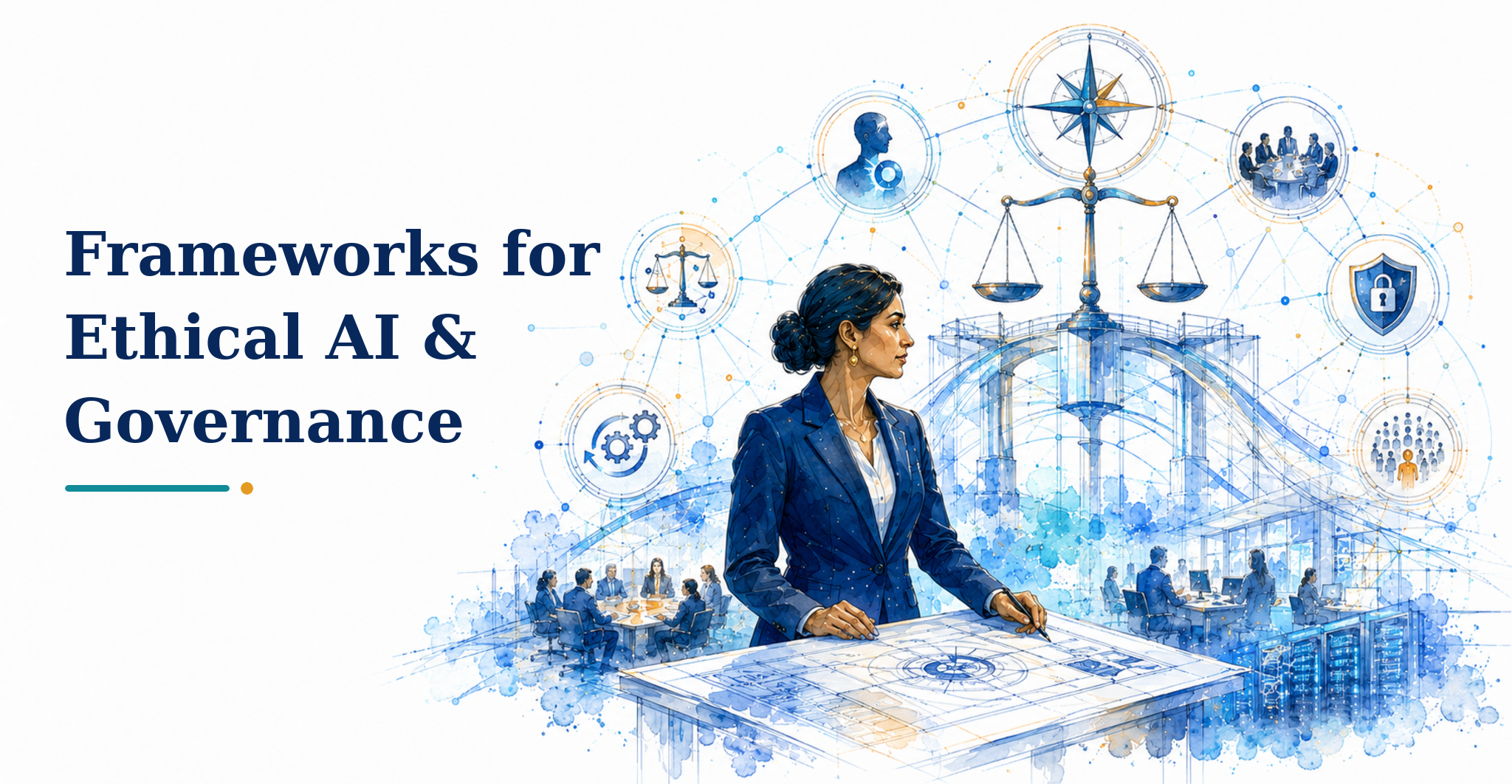
Frameworks for Ethical AI & Governance
Introduction
As artificial intelligence becomes embedded in organizational decision-making, ethical leadership can no longer remain an abstract principle. Leadership values must be translated into systems, processes and governance structures that guide how AI is designed, deployed and supervised.
The central challenge is not a lack of technology. Organizations have access to increasingly capable tools, but many lack the structured frameworks required to connect human intention with responsible technological execution. Without clear decision rights, accountability mechanisms and oversight, AI adoption can become fragmented, difficult to govern and misaligned with organizational values.
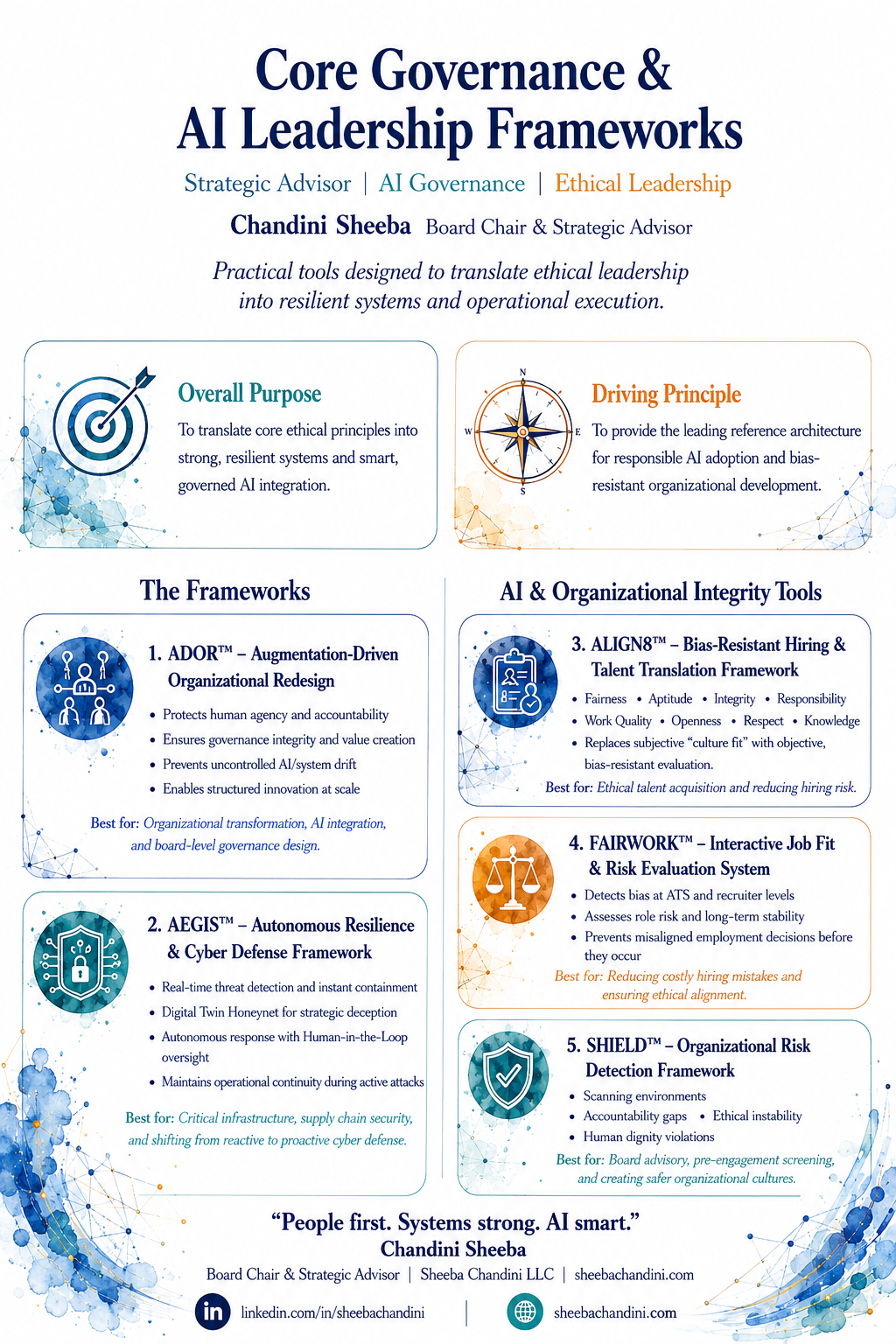
Governance-led design provides the structure needed to turn responsible leadership into operational practice. My frameworks—including ADOR™, ALIGN8™, FAIRWORK™, AEGIS™ and SHIELD™—address different dimensions of organizational transformation, talent decision-making, cybersecurity resilience and institutional accountability. Together, they reflect a shared philosophy:
People first. Systems strong. AI smart.
8 Key Principles Behind the Frameworks
1. People First, Always
AI should strengthen human capability without removing human dignity, judgment or agency. Technology must support people rather than displace accountability for decisions that affect employees, customers and communities.
Every framework begins with a human-centered question: How can this system improve organizational capability while protecting the rights, responsibilities and decision-making authority of the people involved?
2. Governance Before Scale
Scaling AI without appropriate governance can magnify errors, bias and operational risk. Organizations need clearly defined policies, responsibilities, escalation pathways and oversight mechanisms before AI-enabled processes are expanded across departments.
Governance does not begin after deployment. It must be designed into the system from the beginning.
3. Accountability Is Non-Negotiable
Automated decisions must never become ownerless decisions. Organizations should establish who approves an AI system, who monitors its performance, who can intervene and who remains responsible when outcomes create harm or unintended consequences.
Clear accountability makes decisions traceable, reviewable and correctable.
4. Bias Is a System Risk, Not Only a Data Problem
Bias can originate in training data, but it can also emerge from organizational assumptions, job requirements, evaluation criteria, workflows and decision pathways. Addressing bias therefore requires more than technical model testing.
Responsible organizations examine the entire decision system—including the people, policies and processes surrounding the technology.
5. Structure Enables Innovation
Governance is often portrayed as a barrier to innovation. In practice, well-designed governance gives organizations the confidence to experiment, learn and scale responsibly.
Clear boundaries, review points and decision rights make it possible to pursue innovation without exposing the organization to uncontrolled legal, ethical, operational or reputational risk.
6. Human-in-the-Loop Oversight Is a Strategic Advantage
Human oversight should not be treated as a temporary safeguard that disappears as AI becomes more capable. It is an essential component of responsible organizational design.
People remain necessary to interpret context, challenge questionable outputs, manage exceptions and make consequential decisions that require ethical judgment. The objective is responsible augmentation—not uncontrolled autonomy.
7. Alignment Must Replace Assumptions
Whether an organization is hiring employees, introducing AI or redesigning operations, decisions should be aligned with its mission, values, risk tolerance and long-term objectives.
Structured alignment reduces dependence on subjective impressions and helps ensure that people, technology and organizational strategy move in the same direction.
8. Prevention Is More Valuable Than Correction
The strongest governance systems identify vulnerabilities before they become crises. Preventive design includes early-warning indicators, accountability reviews, continuous monitoring, escalation protocols and clearly defined intervention points.
This principle applies across cybersecurity, AI governance, workforce decisions and organizational risk. Preventing avoidable harm is more effective than attempting to repair it after escalation.
3 Practical Examples in Action
Example 1: Organizational Transformation with ADOR™
Consider an organization introducing artificial intelligence across multiple departments. Without a shared structure, individual teams may adopt different tools, apply inconsistent controls and make decisions without clearly assigned ownership.
The ADOR™ Framework—Augmentation-Driven Organizational Redesign—provides an approach for examining how AI adoption affects human roles, organizational processes and governance responsibilities. It helps leaders define where AI should augment employees, where human judgment must remain decisive and how accountability should be maintained throughout the AI lifecycle.
Applied in this context, ADOR™ can support coordinated adoption, clearer decision rights, appropriate human oversight and stronger alignment between innovation and organizational values.
Example 2: Ethical Hiring and Talent Alignment with ALIGN8™ and FAIRWORK™
An organization experiencing inconsistent hiring outcomes may rely heavily on subjective concepts such as “culture fit.” These judgments can introduce bias, obscure job requirements and create misalignment between candidates and organizational needs.
ALIGN8™ provides a structured approach to evaluating talent across relevant dimensions such as fairness, aptitude, integrity, responsibility, work quality, openness, respect and knowledge. FAIRWORK™ complements this process by examining job fit, role-related risk and the potential consequences of misaligned employment decisions.
Together, these frameworks can help organizations create more consistent, transparent and evidence-informed hiring processes while reducing reliance on unstructured subjective judgment.
Example 3: Cyber Resilience and Risk Prevention with AEGIS™ and SHIELD™
In critical infrastructure and interconnected supply-chain environments, a cyberattack affecting one system can quickly disrupt multiple organizations. Traditional security approaches may detect threats but still lack the governance mechanisms needed to contain them while preserving essential operations.
AEGIS™ provides a resilience-oriented approach combining identity trust, continuous verification, autonomous threat detection, controlled containment and human-in-the-loop oversight. SHIELD™ complements this technical architecture by examining organizational risk indicators, accountability gaps, ethical instability and potential threats to human dignity.
Together, these frameworks can support a transition from reactive incident response toward continuous resilience, structured oversight and earlier intervention.
Conclusion: From Ethical Vision to Operational Practice
Ethical leadership is not demonstrated only through statements, policies or organizational values. It is demonstrated through the systems leaders create and the decisions those systems enable.
The future of artificial intelligence will not be defined solely by how advanced its capabilities become. It will also be shaped by whether organizations establish meaningful accountability, protect human agency and align innovation with institutional responsibility.
Organizations that lead responsibly will be those that translate principles into practice—building systems that are resilient, transparent, scalable and fundamentally human-centered.
People first. Systems strong. AI smart.

AI Governance Insights from Hong Kong
It All Begins Here
This reflection captures key insights from the AI for Business conference in Hong Kong, hosted by the Institute of Digital Economy and Innovation at HKU Business School and co-organized with the AI Evaluation Lab at HKU and the Human–Algorithm Interaction Lab at Oxford Saïd Business School., and connects these insights to my ongoing work on AI governance and the ADOR framework.
Conference Reflection: AI for Business – Hong Kong
At the beginning of this year, I had the opportunity to travel to Hong Kong to attend the AI for Business conference. The conference brought together students, researchers, and practitioners presenting thesis work and applied research on how artificial intelligence is reshaping business, governance, and society. Across sessions, the discussions moved beyond technical performance to examine AI’s broader economic, cultural, and ethical implications—highlighting both its transformative potential and its systemic risks.
The AI for Business conference was hosted and supported by a strong consortium of academic and research institutions committed to advancing responsible, interdisciplinary AI scholarship. The event was led by HKU Business School (University of Hong Kong) in collaboration with the Institute of Digital Economy and Innovation (IDEI) and the AI Evaluation Lab (AIEL), reflecting Hong Kong’s growing role as a global hub for AI research and business innovation.
The conference also benefited from international academic partnership with Oxford Saïd Business School and the Oxford Human–AI Interaction Lab (HAI Lab). Their involvement reinforced the conference’s emphasis on human-centered AI, governance, and ethical evaluation—bridging perspectives from Asia, Europe, and global industry practice. Together, these institutions created a rigorous platform for dialogue at the intersection of artificial intelligence, business strategy, public policy, and societal impact.


1. AI Agents, Algorithmic Personalization, and Market Concentration
One of the key themes explored was how AI agents drive algorithmic personalization in digital advertising markets. In mature markets such as the United States, programmatic advertising—largely powered by AI-driven automation—accounts for approximately 88–91% of digital display ad spending, underscoring the scale at which algorithmic decision-making already operates (Amra & Elma, 2025; Insivia, 2024). While competition among platforms appears to improve efficiency, conference discussions emphasized how similar optimization goals and shared data structures lead AI systems to converge, producing algorithmic monoculture.
This convergence can reduce informational diversity and reinforce winner-take-most dynamics, as dominant firms benefit from data network effects that continually improve model performance and raise barriers to entry. From a social welfare perspective, the concern is not the absence of competition, but rather competitive convergence that limits meaningful consumer choice while amplifying concentration risks.
2. When AI Meets Culture: Cultural Avatars and User Engagement
Another key topic examined how AI systems interact with culture, particularly through the use of cultural avatars in AI chatbots. These systems are designed to reflect linguistic, social, and cultural norms, shaping how users experience trust, familiarity, and relevance. Research discussed at the conference indicated that culturally adaptive AI can improve user engagement and trust by 15–30% in diverse or multilingual contexts, particularly in service and support environments.
However, the discussions also highlighted risks when cultural representation is reduced to static or commercialized traits, potentially reinforcing bias or stereotyping. As conversational AI adoption accelerates—supported by evidence that over 50% of working-age adults in the United States have used generative AI tools—the governance of culturally adaptive systems becomes increasingly important (Federal Reserve Bank of St. Louis, 2025). Ethical design, ongoing evaluation, and human oversight were repeatedly emphasized as safeguards in high-autonomy AI environments.
3. The Disruptive Power of AI in Scientific Collaboration: The AlphaFold Example
The conference also examined the disruptive impact of AI on scientific knowledge creation, using AlphaFold as a leading example. AlphaFold has already been used by over three million researchers worldwide and has generated predictions for hundreds of millions of protein structures, dramatically reducing discovery timelines that previously spanned years (Nature, 2022; Quantumrun, 2024). This shift is reshaping collaboration by enabling scientists to build upon shared AI-generated outputs rather than siloed datasets.
At the same time, speakers stressed that subject-matter experts remain essential to validate, contextualize, and govern AI-generated knowledge. As reliance on AI outputs grows, expert oversight becomes critical to ensure scientific rigor, prevent misinterpretation, and manage dependency on high-impact AI infrastructure. This balance between acceleration and accountability emerged as a recurring governance challenge.
4. Dynamic AI–Human Co-Learning in Service Operations
Another topic explored dynamic AI–human co-learning in service operations, focusing on how organizations balance learning through experimentation with reputational risk. Conference discussions referenced a two-stage model: early exploratory learning supported by human review, followed by controlled deployment with restricted feedback loops. While over 80% of organizations report piloting AI in customer-facing services, fewer than one-third have successfully scaled these systems, largely due to concerns around reliability, trust, and brand risk (McKinsey & Company, 2023).
In highly visible service environments, excessive AI experimentation can expose organizations to reputational harm. The conference emphasized governance mechanisms—such as escalation protocols, monitoring systems, and accountability structures—as essential tools for aligning AI learning processes with organizational responsibility.
5. Aligning Large Language Models with Human Decision-Making
The final theme addressed the challenge of aligning large language models (LLMs) with human decision-making in complex, interactive environments. While LLMs offer unprecedented capabilities in information synthesis and contextual response, misalignment can occur when model objectives diverge from human values, judgment, or situational nuance. This risk is amplified in high-autonomy contexts such as cybersecurity, finance, and healthcare.
In the United States, consumer adoption of generative AI is already widespread, yet enterprise-level alignment remains uneven (Federal Reserve Bank of St. Louis, 2025). Speakers emphasized the importance of human-in-the-loop oversight, interpretability, and structured governance frameworks—such as the NIST AI Risk Management Framework—to ensure responsible deployment and accountability (NIST, 2023; OWASP, 2023).
Poster Presentation: The ADOR Framework
As part of the conference, I presented my poster introducing the ADOR framework, which provides a governance-oriented approach to AI adoption by emphasizing accountability, decision oversight, and responsible outcomes. The feedback from faculty, students, and practitioners reinforced the relevance of leadership-led governance models in navigating the ethical, operational, and societal implications of AI. The conference experience strengthened my understanding of how AI systems must be guided not only by technical performance, but by human values and institutional responsibility.
References
Amra & Elma (2025) Programmatic advertising statistics and trends. Available at: https://www.amraandelma.com/top-programmatic-advertising-statistics-2025/
Federal Reserve Bank of St. Louis (2025) The state of generative AI adoption in the United States. Available at: https://www.stlouisfed.org/on-the-economy/2025/nov/state-generative-ai-adoption-2025
Insivia (2024) Programmatic advertising statistics. Available at: https://www.insivia.com/programmatic-advertising-statistics/
McKinsey & Company (2023) The state of AI in 2023: Generative AI’s breakout year. Available at: https://www.mckinsey.com/capabilities/quantumblack/our-insights/the-state-of-ai-in-2023
Nature (2022) Highly accurate protein structure prediction with AlphaFold. Nature, 596, pp. 583–589.
National Institute of Standards and Technology (NIST) (2023) AI Risk Management Framework (AI RMF 1.0). Available at: https://www.nist.gov/itl/ai-risk-management-framework
OWASP (2023) Top 10 risks for large language model applications. Available at: https://owasp.org/www-project-top-10-for-large-language-model-applications/
Quantumrun (2024) AlphaFold 2: statistics, impact, and future implications. Available at: https://www.quantumrun.com/consulting/alphafold-2-statistics/ .

These discussions directly inform my ongoing research and the development of the ADOR framework, which focuses on accountability, decision oversight, and responsible AI outcomes.